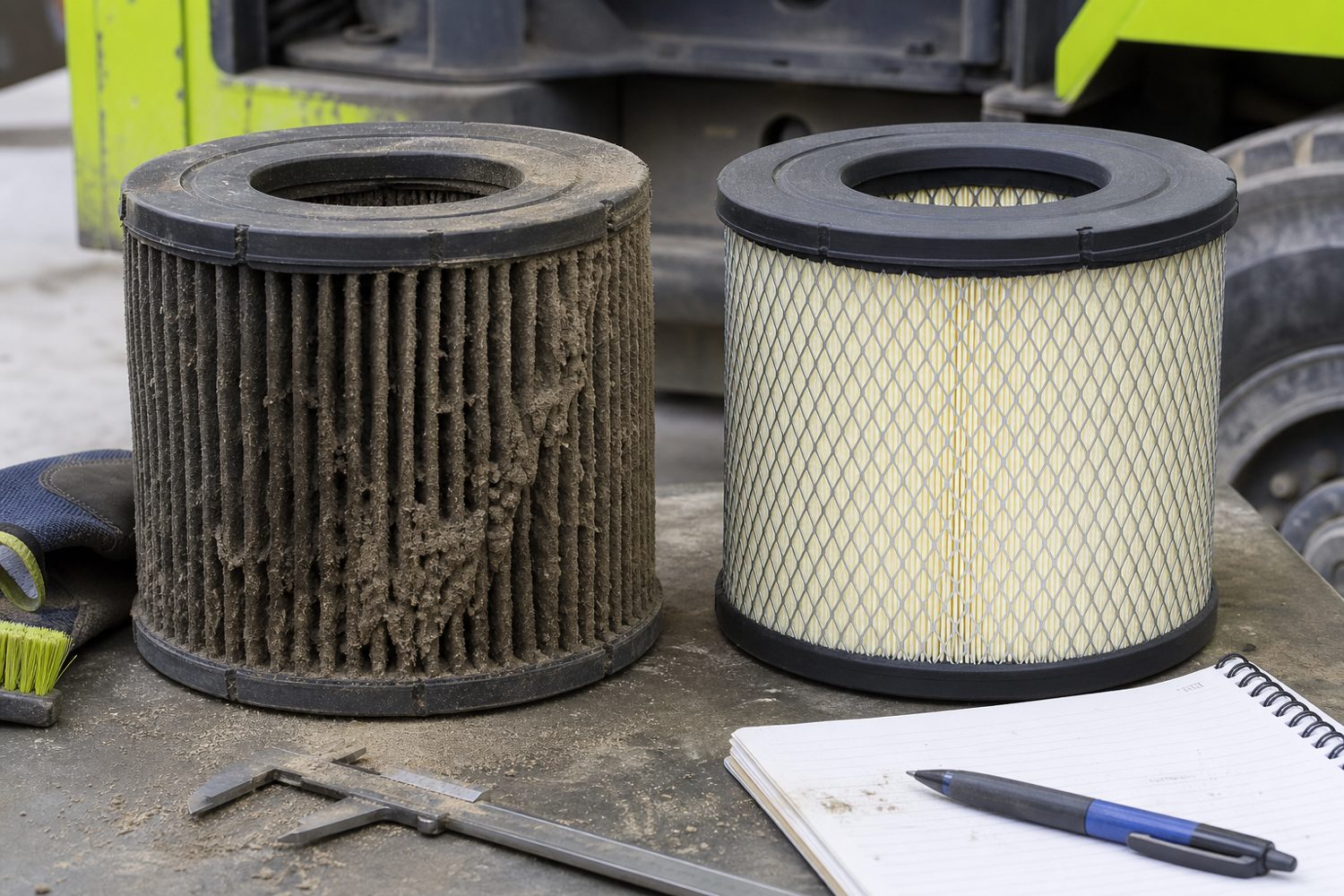
1. Restriction is a pressure problem, not a colour chart
An air filter captures dust inside a structured media pack. As loading rises, resistance to airflow increases. The useful measure is pressure drop across the intake system under a defined operating condition. Surface colour is poor evidence: local dust can stain media quickly, while a pale element may contain fine loading that is difficult to see.
Where the machine has a restriction indicator, confirm that the indicator and its hose are intact, reset correctly and read under the conditions specified by the equipment maker. A broken indicator can falsely reassure the operator; an indicator mounted on a leaking intake can miss the most dangerous failure entirely.
2. Dust downstream is an immediate investigation
Clean-air piping after the primary element should not show a trail of fine dust. If it does, stop treating the filter as the only suspect. Look for a pinched gasket, damaged end cap, warped housing, loose clamp, cracked hose, failed safety element or an incorrectly seated part. Wiping the pipe and fitting another filter without finding the path simply resets the evidence.
3. Cleaning can damage what the eye cannot see
Striking an element against a tyre or floor can fracture media and deform end seals. High-pressure compressed air can open microscopic passages, especially when the nozzle is held close or directed from the dirty side. The element may look cleaner while its ability to stop fine abrasive particles has been reduced. Follow the equipment and filter instructions; where cleaning is not explicitly permitted, replace rather than improvise.
4. A sudden restriction rise points beyond normal loading
A rapid change can follow work in unusually fine dust, a blocked pre-cleaner, debris at the inlet, moisture reaching the media, an incorrect element or a collapsed pack. Compare the event with site conditions and inspect the intake entrance. On machines sharing a site, compare similar units: one abnormal reading among otherwise similar duty is useful diagnostic evidence.
5. Service records turn a filter into information
Record unit ID, engine hours, date, removed reference, restriction reading and the reason for change. Add a photograph if the element shows dust tracks, moisture, deformation or unusual colour. Over several intervals, this record reveals whether changes follow actual condition, arbitrary dates or emergency availability. It also helps the buyer stage the right item before the next service window.
6. When to ask for support
Contact a competent technician when restriction remains high after replacement, dust is visible downstream, the housing is damaged, the correct reference is uncertain, or engine symptoms persist. Filtration protects the engine only when the intake system is sealed and the selected element matches the housing.
Send the machine and engine plate, installed filter markings, housing dimensions where necessary, current hours, restriction reading and one clear photo of the complete housing.